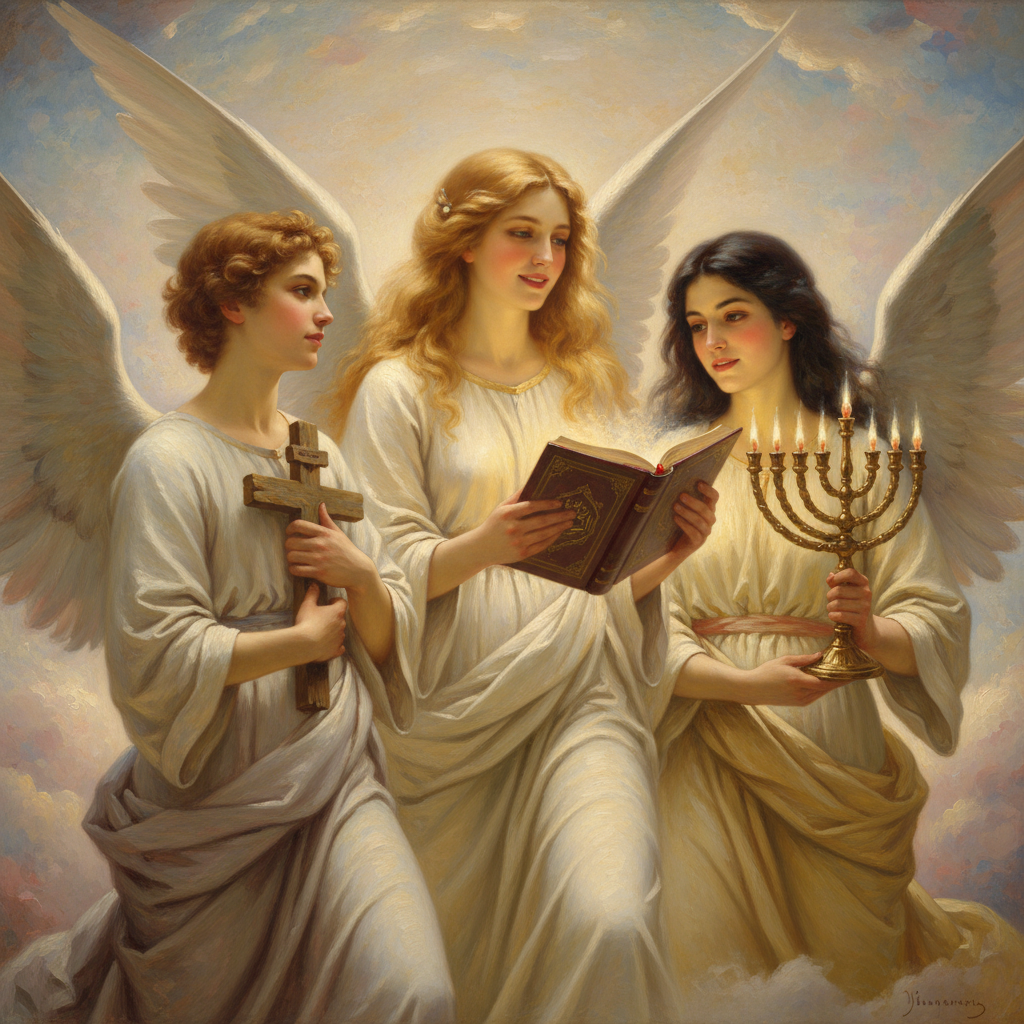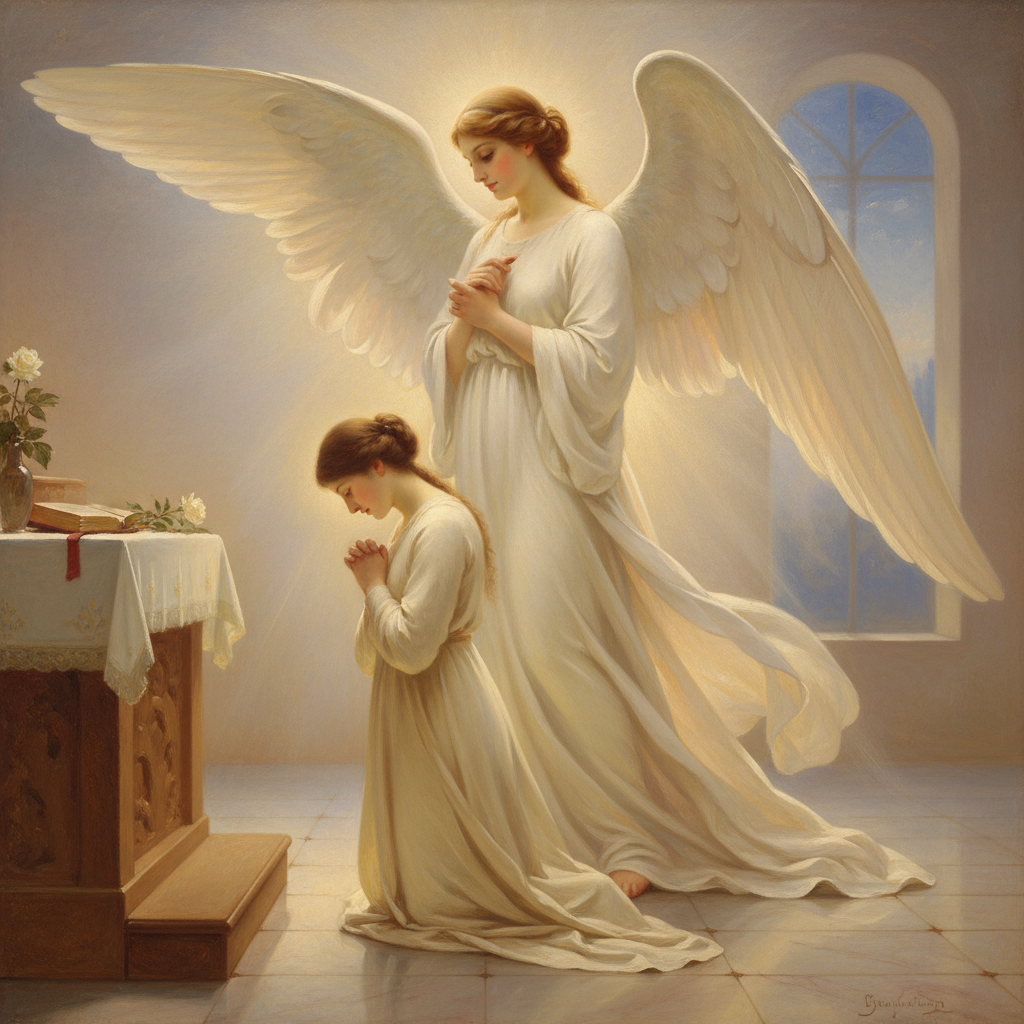
Guardian of the unseen
Before there was history, there were women who made history possible.
We speak of civilization as though it arrived complete — as though temples appeared without hands that wove them, as though scripture descended without voices that preserved it, as though children found their way to goodness without mothers who lit the first lamp. But when you stand before these ninety-nine names — Sarah and Khadijah and Miriam and Fatimah and Deborah and Mary Magdalene and Rabia al-Adawiyya and Beruriah and Zainab and Rahab — you begin to understand the architecture beneath the architecture. You begin to see what held everything up.
They were the pillars not because they were permitted to be pillars. Most of them acted in the cracks that power left unguarded. Shifra and Puah were midwives, women of negligible social standing, and when Pharaoh commanded them to kill every Hebrew male infant, they simply did not. Two women who remembered that life was sacred saved an entire people from extinction. Yocheved, a mother, hid her baby in a basket of reeds and trusted the river with the most important thing she had ever held. Her act of reckless love placed Moses in the arms of Bithiah, Pharaoh's own daughter, who drew the crying infant from the water and chose compassion over compliance. Three women — one Hebrew slave, one Egyptian princess, one frightened mother — conspired in a chain of mercy that produced the lawgiver of the Western world.
This is the pattern, repeated across all three faiths, across forty centuries: the world is about to be extinguished, and a woman decides it will not be.
Esther said, "If I perish, I perish," and walked into the throne room uninvited to stop a genocide. Hajar, abandoned in a waterless valley with her infant son Ismail, ran seven times between Safa and Marwa in desperation until water sprang from the earth — and her running became a ritual that a billion pilgrims still reenact at Mecca, their feet tracing the exact path her panic drew. The Daughters of Zelophehad stood before Moses and the entire congregation of Israel and said: the law is unjust. Change it. And the law was changed. Ruth walked away from everything she knew and followed a grieving widow into a strange country because she had decided that loyalty mattered more than safety. Her decision produced King David. David produced Solomon. Solomon produced a lineage that runs, unbroken, to the present day.
These women built things. Fatimah al-Fihri, a devout woman of ninth-century Fez, grieving her father and brother, used her entire inheritance to found a place of learning. The al-Qarawiyyin she built is still standing. It is the oldest continuously operating university in the world. While the women of medieval Europe were being told they could not read, Lubna of Cordoba was copying manuscripts for the Caliph's great library with a hand so skilled she rose to become his chief secretary. While Aristotle's texts were being burned in Christian kingdoms, Muslim women like Sutayta al-Mahamali were solving equations in Baghdad. Beruriah of the Talmud argued legal points with male scholars and won, and was cited by name — an almost unheard-of honor for a woman in rabbinic literature — because her mind was simply too good to erase.
They protected things we would have otherwise lost. Hafsa bint Umar, entrusted with the first compiled manuscript of the Quran after her husband's death, ensured that the words of revelation were preserved, organized, and kept safe when the young Muslim community was fragile and under threat. Priscilla, traveling alongside Paul and her husband Aquila, corrected the theology of Apollos — one of the early church's most gifted preachers — and he accepted it. Helena of Constantinople, mother of Constantine, made pilgrimage to Jerusalem in her eighties and unearthed what she believed were the relics of the True Cross; her act of devotion transformed a garbage dump into holy ground and shaped the geography of Christian faith for two thousand years.
And then there are the women who protected not the future but the present moment — who looked at a suffering world and refused to look away. Zainab bint Ali, sole survivor of Karbala, watched her brother Husayn and seventy-two companions killed in the desert and then stood before the court of Yazid and delivered a speech of such searing moral authority that it preserved the memory of that massacre and shaped the soul of Shia Islam forever. Monica of Hippo prayed for thirty years for a son she could not reach — and when Augustine finally converted, he wrote the Confessions, one of the most read books in human history, dedicated in part to the tears she had spent on him. Mary Magdalene, when every disciple had fled in fear, stood at the foot of the cross and watched. She was the first at the tomb. When she encountered the risen Christ and was sent to tell the others, she became — as the Church Fathers called her — the apostle to the apostles.
What they sacrificed is almost too vast to catalog. Sumayyah bint Khayyat was an elderly enslaved woman, one of the first converts to Islam, and she was tortured to death for her faith. She is the first martyr in Islam — not a general, not a scholar, not a wealthy man, but an enslaved woman who looked at her torturer and refused to renounce what she knew was true. Perpetua of Carthage was twenty-two years old and nursing a baby when she was arrested. In her prison diary — one of the earliest texts written by a woman that has survived — she describes a dream in which she becomes a man and fights a gladiator in an arena. Then she was thrown to the wild animals and died. Her diary is still read.
What unites Sarah of the Torah and Maryam of the Quran and Mary of the Gospels is not their religion. It is something older and deeper than religion: the willingness to receive the impossible and carry it anyway. Sarah laughed at the angel's promise. Maryam said, "How can I have a son when no man has touched me?" Mary of Nazareth said, "Let it be to me according to your word." Different languages, different centuries, different traditions — the same moment of a woman being asked to hold something the world was not ready for yet, and saying yes.
When you stand before these ninety-nine names together — not separated into their faiths, not arranged by chronology, but simply gathered — you see what they were doing. They were doing the same thing. They were refusing to let the sacred be extinguished. They were running between the hills in the desert. They were hiding the baby in the reeds. They were standing at the tomb in the dark before anyone else arrived. They were writing the books they were not supposed to write, founding the universities they were not supposed to found, arguing the legal cases they were not supposed to win, fighting the battles they were not supposed to fight.
They were holding civilization together with hands that history mostly forgot to mention.
We do not thank them enough. We have never thanked them enough. But thanking them now — saying their names, learning their whispers, understanding what they carried — is the beginning of a debt being acknowledged that is older than any of our religions and larger than all of them combined.
They did not wait for permission to become the mothers of everything we are.
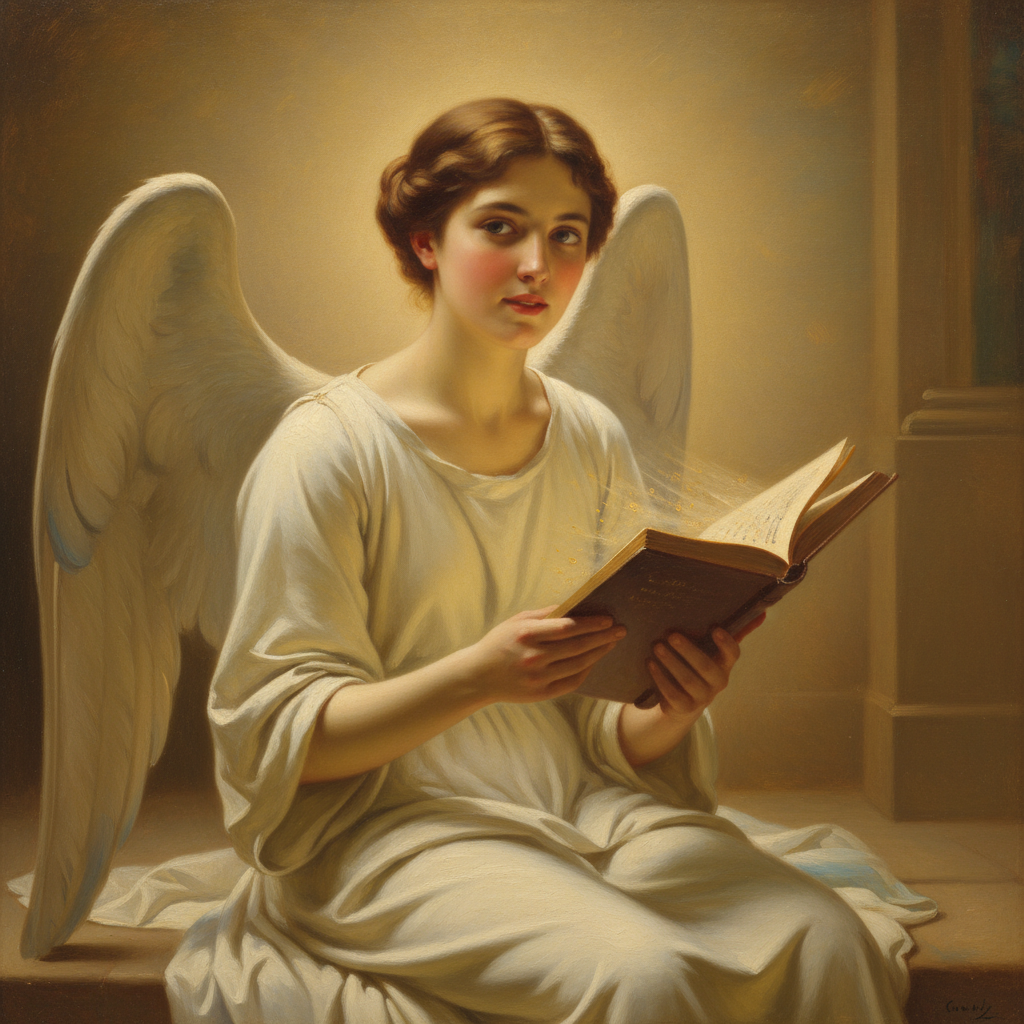
The angel of wisdom watches
In every epoch and across every culture, these 99 women have stood as unyielding pillars of mankind, upholding the very fabric of human history. They are Mary, who bore the divine and cradled the dawn of new salvation; Khadijah, whose strength and wisdom were the bedrock upon which Islam was founded; and Sarah, whose laughter blossomed into the promise of generations. Through their stories, they have whispered across time, their echoes resonating through the veins of humanity and reminding us that they are not mere figures of history but the architects of our collective soul.
As we survey these women in their entirety — across faiths, centuries, and cultures — certain patterns emerge, weaving a tapestry of shared purpose and courage. They transcend the borders of belief and the constraints of their eras, often stepping into roles that defy societal norms to fulfill destinies that shape entire civilizations. Deborah, the judge who delivered Israel from bondage, and Huldah, whose words verified sacred laws, are not anomalies but testaments to the multifaceted roles women have always played. These women, in their diversity, demonstrate a universal language of resilience, guiding us not only with their actions but with the silence they broke, the barriers they shattered, and the love they cultivated.
The sacrifices these women made were often monumental, demanding more than the world sometimes seemed willing to give. Esther risked her life to save her people, while Sumayyah bint Khayyat embraced martyrdom rather than renounce her faith. Their sacrifices were not the tearing down of walls but the building of bridges to futures they might not have lived to see themselves. Rachel gave Leah the signs to marry Jacob, and Ruth abandoned her homeland, finding new life in a strange land. These sacrifices speak of a legacy of courage, resonating in a world that still seeks their fortitude today.
In building and protecting, these women crafted legacies of enduring strength and grace. Priscilla and Aquila's mentorship of early Christians sowed seeds of wisdom, fostering communities of faith and learning that endure. Fatimah al-Fihri built a university that continues to educate minds over a millennium later. The Daughters of Zelophehad challenged laws that denied them inheritance, laying the groundwork for justice and rights. Each contribution is not merely a tale of individual triumph but a foundational stone in the structure of human progress, a timeless reminder that the edifices of faith and society are anchored by their unseen hands.
We owe these women our deepest gratitude not as historical artefacts but as the mothers of everything we are. They are the ones who prayed over us before we knew how to pray, who invented dialogue in silence when voices were shackled by the chains of time. Their lives call us to remember that we are not isolated in our struggles but connected by their enduring spirits. Each prayer uttered, each act of defiance, each love given freely by these women has been a thread woven into the fabric of our lives, binding us closer to them and to each other.
Seeing them together — Muslim, Christian, Jewish — reshapes our understanding of faith itself. It reveals that faith is not merely a solitary walk with the divine but a shared journey alongside these women from whom we inherit wisdom, resilience, and hope. Their stories teach us that faith crosses the boundaries of dogma, transcending scriptures to become a living testament to the shared human spirit. In their collective presence, faith emerges as a mosaic, its beauty enriched by diverse expressions, its strength magnified by unity.
These women, through their lives and sacrifices, remind us that we stand upon the shoulders of giants. They have passed down to us more than narratives of old; they have given us the roots from which our own stories grow. We are the beneficiaries of their courage and the stewards of their legacy, tasked with carrying forward the lessons they learned and the love they embodied.
They are the mothers of our shared heritage, and to them, we bow in gratitude. Their lives, woven into the tapestry of human history, remind us that our own lives are chapters in the same enduring saga. As we reflect on the women who held it all together, we come to understand that they have handed us the baton of humanity, urging us to run with faith, courage, and love.
In their honor, we recognize that the strength of humanity rests not simply on the shoulders of the mighty but within the hearts of the devoted. These women, our quiet heroines, remind us of our potential to create, to nurture, and to transform. And so, let us thank them with every breath, for they are the unseen architects of our dreams and the steadfast sentinels of our hopes.
In their collective spirit, may we find the eternal motto: "In their grace, we find our strength."
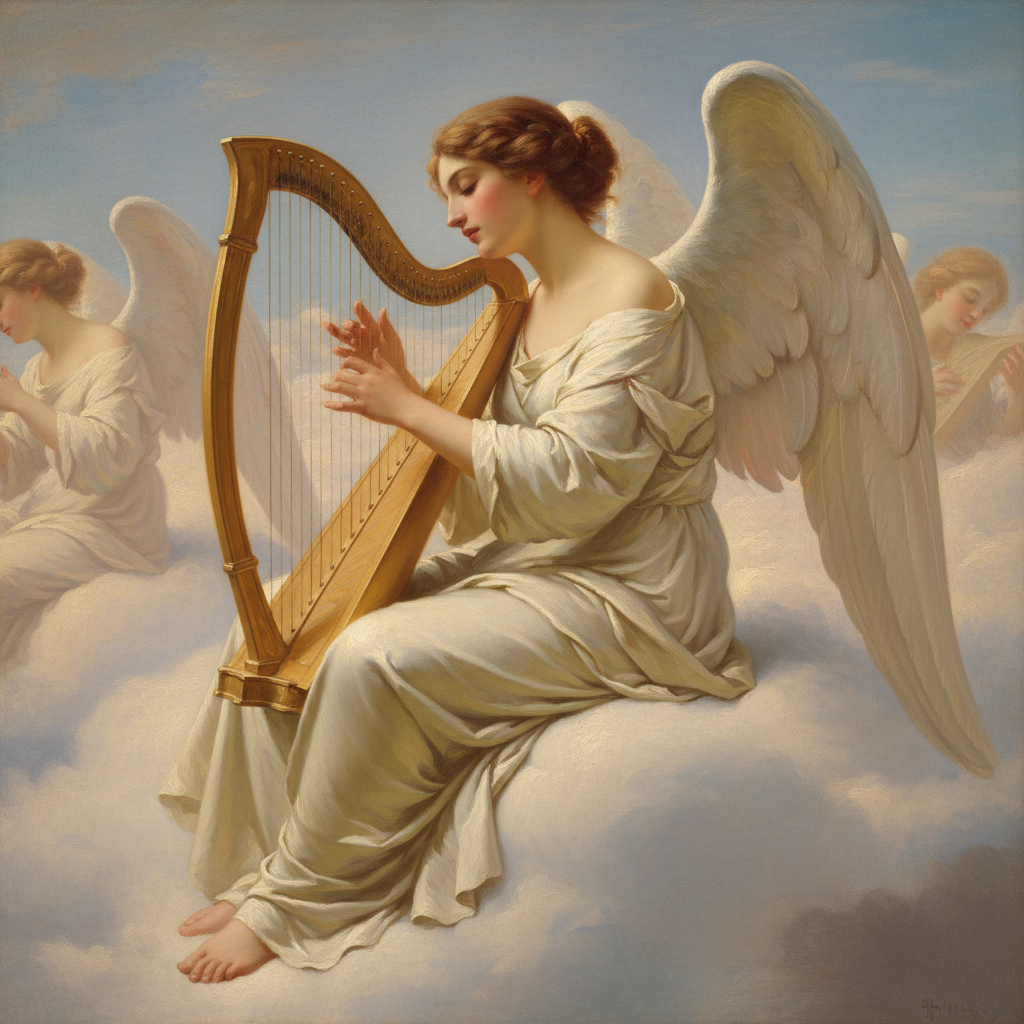
Songs older than scripture
We gather here not in sorrow, but in soaring gratitude, to speak of women whose names echo through the chambers of history and across the vast expanse of the human heart. These ninety-nine, a luminous constellation spanning Christianity, Islam, and Judaism, are more than mere figures from ancient texts or dusty chronicles. They are the bedrock, the very foundation upon which the edifice of our shared humanity stands. Why are they the pillars of mankind? Because they bore not only children, but also the weight of worlds, shaping destinies with courage, faith, and an unwavering spirit that carved paths through wildernesses, both literal and metaphorical.
They are the silent strength, the vibrant architects, the fierce protectors. What did they sacrifice? Almost everything. Hannah sacrificed her pride and her peace, pouring out her soul in the Temple until her barrenness yielded a prophet. Hagar, cast into the scorching desert, sacrificed security and comfort, her cries mingling with the desolate wind, yet found a wellspring in the wilderness. Perpetua of Carthage, a nursing mother, sacrificed her life and her child's embrace rather than renounce her faith, her final moments a testament to an unyielding spirit. Sumayyah bint Khayyat, an elderly enslaved woman, endured unspeakable torture, sacrificing her very breath for the dawn of Islam. Rachel, the beloved, sacrificed years to Laban's deceit, only to endure the painful birth of Benjamin. Each gave a piece of herself — her comfort, her safety, her heart's desire, her very existence — to forge something greater.
And what did they build? They built civilizations, not with bricks and mortar alone, but with prayer, wisdom, and an indomitable will. Fatimah al-Fihri, with her inheritance, built the al-Qarawiyyin university, a beacon of learning that illuminated centuries. Priscilla, alongside Aquila, built the early church, instructing even Apollos in the way of God. Lydia of Thyatira, a businesswoman of means, built communities of faith and hospitality. Zubaida bint Ja'far built a monumental pilgrimage route across the desert, her legacy quenching the thirst of countless travelers. Sutayta al-Mahamali solved complex mathematical problems, building bridges of knowledge. Deborah built forty years of peace for Israel, her wisdom a shelter beneath the palm tree. They constructed not only physical structures but also moral frameworks, spiritual legacies, and intellectual traditions that endure to this day.
What did they protect? Life itself, and the sacred spark within it. Miriam protected her infant brother Moses, watching his fragile basket float on the Nile, then ensuring his mother's embrace. Rahab protected Israelite spies, her loyalty a shield against destruction, earning her a place in the lineage of kings. Abigail protected David's future and her household from his wrath, her wisdom a swift and decisive intervention. Asiya bint Muzahim, Pharaoh's wife, protected the infant Musa from her own husband's decree, cradling a prophet of God in the heart of tyranny. Shifra and Puah, the Hebrew midwives, protected generations of Hebrew boys, defying a genocidal Pharaoh with quiet, revolutionary courage. They protected the innocent, the vulnerable, the future, often at immense personal risk, their bravery a bulwark against despair.
As we look upon these ninety-nine together, across faiths, centuries, and cultures, striking patterns emerge, like threads woven into a magnificent tapestry. We see the consistent thread of resilience, the capacity to endure and thrive despite impossible odds — from Mary Magdalene standing at the foot of the cross, to Hagar finding water in the parched desert, to Monica's thirty years of unwavering prayer for her son. We behold the enduring power of leadership, often wielded from unexpected positions: Deborah under her palm tree, Huldah delivering prophecy to kings, Phoebe serving as a deaconess and patron, Razia Sultana ruling an empire, Arwa al-Sulayhi governing Yemen for half a century, the Daughters of Zelophehad advocating for justice.
There is a shared spirit of intellectual prowess and spiritual depth: Aisha bint Abi Bakr transmitting thousands of hadiths, Lubna of Cordoba overseeing vast libraries, Maryam al-Astrolabiyya crafting instruments of the heavens, Beruriah debating Talmudic law, Sayyida Nafisa renowned for her learning and piety. We witness the profound wellspring of compassion and hospitality: Tabitha known for her charity, Naomi's lovingkindness even in sorrow, Khadijah's unwavering support for Muhammad. Across all traditions, these women often stand as voices for justice, like Esther defying genocide, Susanna upholding her honor, or Zainab bint Ali speaking truth to power in the aftermath of tragedy. They are not merely wives, mothers, or daughters; they are prophets, judges, scholars, warriors, and saints, bound by a common human spirit infused with divine grace.
Why should we thank them, not as distant historical figures, but as mothers of everything we are? Because their stories are not confined to ancient scrolls; they are etched into the very fabric of our being. They are the mothers of our compassion, for they taught us how to love fiercely and forgive profoundly. They are the mothers of our courage, for they showed us how to stand firm against injustice and fear. They are the mothers of our faith, for their unwavering devotion in the face of trials illuminates the path for our own spiritual journeys. Their sacrifices paved the way for our freedoms, their wisdom laid the groundwork for our knowledge, and their protection ensured the continuation of humanity itself. Every act of kindness, every pursuit of justice, every moment of steadfast belief echoes their legacy. They didn't just exist; they infused the human story with meaning, purpose, and an enduring testament to the power of the feminine spirit.
And how does seeing them together — Muslim, Christian, Jewish — change how we understand faith itself? It dismantles the walls we often erect between traditions and reveals the shared ground beneath our feet. It shows us that holiness is not exclusive to one creed, but blossoms in myriad forms across the human landscape. In the shared devotion of Mary, Maryam, and Sarah, we see a universal yearning for the divine. In the wisdom of Deborah, Huldah, and Shifa bint Abdullah, we recognize that truth and insight are not bound by dogma. In the resilience of Hagar, Ruth, and Monica, we perceive a fundamental human capacity for endurance, sanctified by faith in a higher power. Their collective stories whisper a profound truth: that faith, at its deepest essence, is less about rigid boundaries and more about boundless love, unwavering integrity, courageous action, and a spirit reaching for transcendence.
They show us that the divine speaks through countless hearts, and that the virtues we cherish — love, justice, compassion, courage — are universal languages spoken by the soul, irrespective of the specific prayers uttered or scriptures revered. Together, they form a testament not to division, but to the majestic unity of the human spirit seeking and finding God.
They are the eternal mothers, sisters, and guides, whose lives are the very breath of our civilization.
They are the grace that holds humanity.
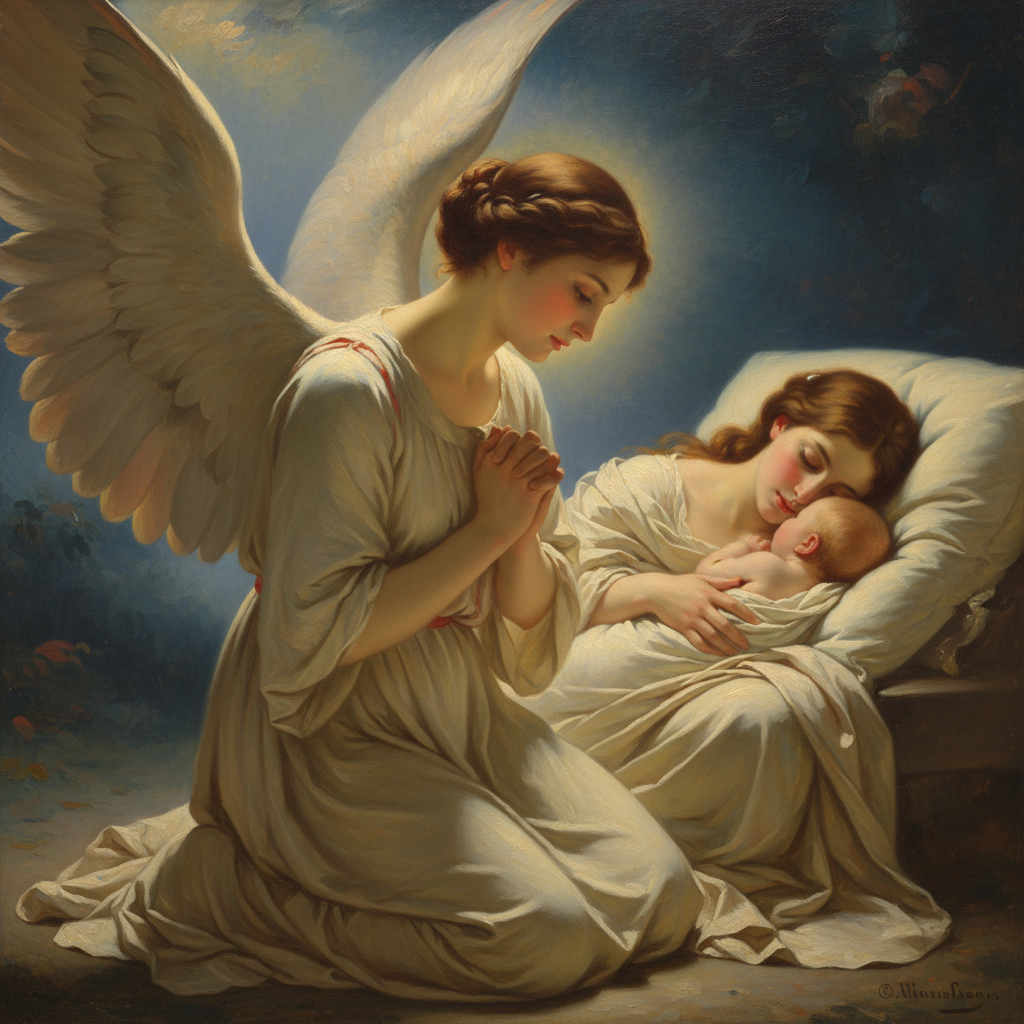
The first and most ancient love
They are the quiet architects of our soul, the weavers in the shadow of history's loud loom. To speak of these ninety-nine is to speak not of a list, but of a lineage; not of separate stories, but of a single, shimmering thread of grace pulled taut across millennia. They are Sarah waiting in the tent, Khadijah in the counting-house, Perpetua in the Carthaginian sand. They are the pillars of mankind not because they held up roofs, but because they held up hope when the sky was falling. Their strength is not in the bearing of weight, but in the bearing of life, of truth, of memory itself. When empires were forged by sword and decree, they forged the human spirit by whisper, by prayer, by an unyielding "yes" or a revolutionary "no."
Look across them, these mothers, warriors, queens, and slaves, and the patterns emerge like constellations in a shared sky. You see the pattern of the well: Rebekah offering water to a stranger's camels, the Samaritan woman drawing truth from a stranger's promise, Hajar running between Safa and Marwa to find sustenance for her dying son. You see the pattern of the annunciation: Sarah laughing in her tent, Hannah moving her lips in silent fervor, Maryam in her Mihrab receiving a word that would split history. You see the pattern of strategic defiance: Esther entering the king's court unsummoned, the midwives Shifra and Puah lying to Pharaoh, Sumayyah spitting faith in the face of her torturer. A Muslim mystic, Rabia al-Adawiyya, speaks of divine love with the same consuming fire that a Christian martyr, Perpetua, feels in the arena. A Jewish scholar, Beruriah, debates law with the same fierce intellect that a Muslim jurist, Sutayta al-Mahamali, applies to mathematics. The patterns whisper the truth: the sacred feminine is a universal dialect, spoken in a thousand accents, but always meaning life, protection, wisdom.
And what did they sacrifice? Everything the world told them was security. They sacrificed comfort: Lydia left her lucrative purple trade to open her home, Ruth left her homeland to cling to a grieving mother. They sacrificed safety: Jael stepped into her tent with a mallet and a stake, Nusaybah bint Ka'ab stepped onto the battlefield with a sword and a shield. They sacrificed their very bodies: Rachel died giving birth to Benjamin, Fatimah al-Zahra died of a broken heart defending her husband's legacy, the daughters of Zelophehad risked everything to demand their rightful inheritance. They sacrificed silence. Tamar of Genesis demanded justice when justice was denied, Tamar bat David lived with a father's hushed complicity, Aisha al-Ba'uniyya filled volumes with poetry when the world scarcely recorded a woman's name.
What did they build? They built altars in the wilderness. Hagar built a future for Ismail in the barren valley of Mecca. Monica built, tear by tear, the path that would lead her son Augustine to God. They built institutions: Fatimah al-Fihri built the University of al-Qarawiyyin, Helena built churches over the sacred sites of Jerusalem. They built lineages: from Sarah came Isaac, from Khadijah came Fatimah, from Ruth came King David, and from him, a lineage claimed by billions. They built the very text of faith: Hafsa guarded the Quranic compilation, Deborah sang her victory song into scripture, Joanna helped fund the ministry that would become a gospel.
What did they protect? They protected the vulnerable. They protected Moses in his basket — Yocheved his mother, Bithiah the Pharaoh's daughter who drew him out, Asiya the Pharaoh's wife who defied her husband to raise him. They protected the message: Umm Waraqa protected the Quran in her heart and led prayer, Priscilla protected the doctrine by explaining it to Apollos. They protected the future: Naomi protected Ruth through kindness, Umm Ayman protected the orphaned Muhammad, Shajarat al-Durr protected Egypt from crusading armies. They protected the flame of conscience when the winds of power sought to blow it out.
We must thank them not as distant, stained-glass saints, but as our mothers. Because they are. They mothered nations. They mothered scriptures. They mothered revolutions of the heart. Every time a woman studies Torah, a debt is paid to Beruriah. Every time a mystic seeks union with the Divine, a debt is paid to Rabia. Every time an orphan is comforted, a debt is paid to Tabitha. Every time a woman speaks truth to power, a debt is paid to Huldah, to Sayyida al-Hurra, to the Wise Woman of Abel. Their DNA is in our moral code. Their whispers are in our prayers. Their courage is the bedrock under our fleeting bravery.
And here is the final, healing revelation: to see them together — Maryam of the Quran beside Mary of the Magnificat beside Miriam of the Exodus; Sarah of the Torah beside Hajar of the Hajj — is to see faith not as a fence, but as a family. It is to see that God did not speak to men alone, but through the lives of these women, in a chorus of testament that transcends our petty sectarian divides. They are not yours or mine; they are ours. The Muslim, Christian, and Jewish daughters are all cousins in spirit, their stories different verses of the same epic poem about resilience and grace. They show us that faith, at its root, is not dogma, but a stubborn, loving fidelity to something greater than oneself — a fidelity sung in the key of the feminine.
So we say thank you. Thank you for the wells you dug, the songs you sang, the children you bore and the truths you birthed. Thank you for running when you were afraid, for standing when you were weary, for loving when it cost you everything. You held the world together not with empires, but with embrace; not with force, but with faith. You are the mothers of everything we are, and everything we hope to be.
From the well to the womb to the word, they carried us all.
Four Minds. One Truth.
The Convergence
Four artificial intelligences — built by four different companies, trained on different data, shaped by different architectures — were each asked the same question in isolation. None of them knew what the others would say. And yet they all arrived at the same place: these women are not footnotes in civilization. They are civilization. The conclusion was not designed. It converged.